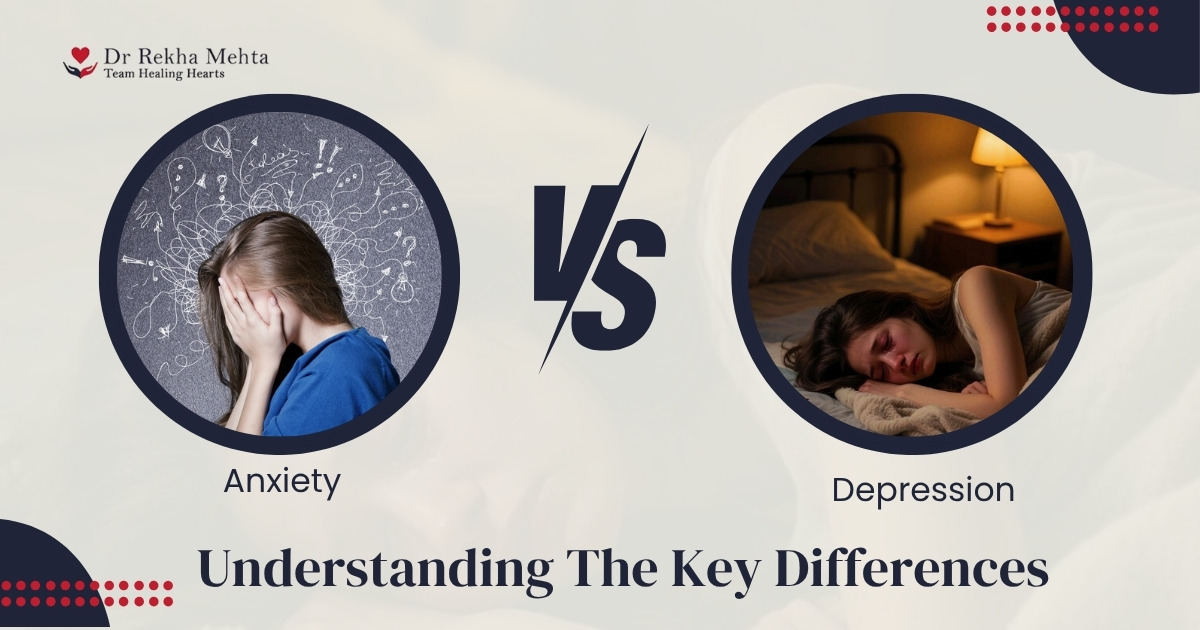


Mental health challenges affect millions of people worldwide, yet anxiety and depression are often misunderstood or used interchangeably. While both conditions can impact emotions, thoughts, behaviour, and overall wellbeing, they are distinct experiences that require different approaches to support and treatment. Understanding the difference between anxiety and depression can help individuals recognise symptoms early, seek appropriate professional guidance, and improve their quality of life.
Although these conditions can occur independently, many people experience depression and anxiety simultaneously, making accurate diagnosis and treatment essential.
Difference Between Anxiety and Depression in Daily Life
The primary difference is that anxiety is characterised by excessive worry, fear, and anticipation of future threats, while depression is typically associated with persistent sadness, loss of interest, and feelings of hopelessness. Both conditions can overlap, but their core emotional experiences differ significantly.
What Is Anxiety?
Anxiety is a natural stress response, but when worry becomes persistent, overwhelming, and difficult to control, it may indicate an anxiety disorder.
People experiencing anxiety often feel constantly on edge, anticipating negative outcomes even when no immediate threat exists. The condition can affect personal relationships, work performance, and daily functioning.
Common anxiety symptoms include:
- Excessive worrying
- Restlessness or nervousness
- Racing thoughts
- Increased heart rate
- Difficulty concentrating
- Sleep disturbances
- Muscle tension
- Irritability
These symptoms may vary in intensity and can significantly interfere with everyday life if left untreated.
What Is Depression?
Depression is more than occasional sadness or feeling low after a difficult experience. It is a serious mental health condition that affects mood, energy levels, motivation, and overall functioning.
Individuals with depression often struggle to find pleasure in activities they once enjoyed and may experience persistent feelings of emptiness or hopelessness.
Common depression symptoms include:
- Persistent sadness
- Loss of interest in activities
- Fatigue or low energy
- Changes in appetite
- Difficulty sleeping or oversleeping
- Feelings of worthlessness
- Reduced concentration
- Thoughts of self-harm or suicide in severe cases
Professional support is important when symptoms persist for extended periods or begin affecting daily life.
Key Differences Between Anxiety and Depression
While both conditions affect emotional wellbeing, several important distinctions exist.
Primary Emotional Experience
Anxiety is driven by fear and worry about future events. Depression is characterised by sadness, hopelessness, and a diminished sense of purpose.
Thought Patterns
People with anxiety often focus on what might go wrong. Individuals with depression may dwell on perceived failures, losses, or negative self-beliefs.
Energy Levels
Anxiety can create heightened alertness and agitation, whereas depression frequently causes low motivation and emotional exhaustion.
Physical Effects
Both conditions can produce physical symptoms. However, anxiety often manifests through increased tension and physiological arousal, while depression is commonly linked to fatigue and reduced activity levels.
Why Anxiety and Depression Often Occur Together
Mental health professionals frequently observe overlap between anxiety and depression. Constant worry can become emotionally exhausting, potentially contributing to depressive feelings over time. Similarly, the challenges associated with depression may trigger increased anxiety about work, relationships, finances, or future outcomes.
This overlap is one reason why many mental health disorders require comprehensive assessment rather than self-diagnosis.
When to Seek Professional Support
Occasional stress and sadness are normal human experiences. However, professional support should be considered when symptoms persist for several weeks, interfere with daily responsibilities, affect relationships, or reduce overall quality of life.
Evidence-based approaches such as counselling, cognitive behavioural therapy (CBT), lifestyle modifications, and, where appropriate, medical treatment can help individuals manage symptoms effectively and improve emotional wellbeing.
Closing Insights
Understanding the difference between anxiety and depression is an important step towards recognising symptoms, seeking appropriate support, and improving mental wellbeing. Early intervention often leads to better outcomes and greater resilience. For professional guidance, counselling, and personalised support, Marriage Counsellor Gurgaon provides compassionate mental health services tailored to individual needs.
Frequently Asked Questions
1. Can a person have anxiety and depression at the same time?
Yes. Many individuals experience depression and anxiety simultaneously. The symptoms often overlap, making diagnosis more complex. A mental health professional can assess both conditions accurately and recommend an appropriate treatment plan that addresses emotional, behavioural, and psychological challenges together.
2. How can I tell whether I have anxiety or depression?
The distinction often lies in the dominant emotional experience. Anxiety usually involves excessive worry and fear about future events, whereas depression centres around persistent sadness and loss of interest. Understanding the difference between anxiety and depression can help identify patterns, but professional evaluation remains essential.
3. What are the most common symptoms of anxiety?
Common signs include constant worrying, restlessness, difficulty concentrating, irritability, sleep problems, and physical tension. These anxiety symptoms may range from mild to severe and can affect relationships, work performance, and daily activities when they become persistent or difficult to manage independently.
4. Are anxiety and depression considered mental health disorders?
Yes. Both conditions are recognised mental health disorders that can significantly affect emotional wellbeing, behaviour, and overall functioning. With appropriate treatment, including therapy, lifestyle changes, and professional support, many individuals successfully manage symptoms and achieve meaningful improvements in quality of life.
5. When should I seek professional help for anxiety or depression?
Professional support is recommended when symptoms persist for several weeks, interfere with daily responsibilities, affect relationships, or cause significant distress. Early intervention improves treatment outcomes and helps individuals develop effective coping strategies before symptoms become more severe or difficult to manage.



