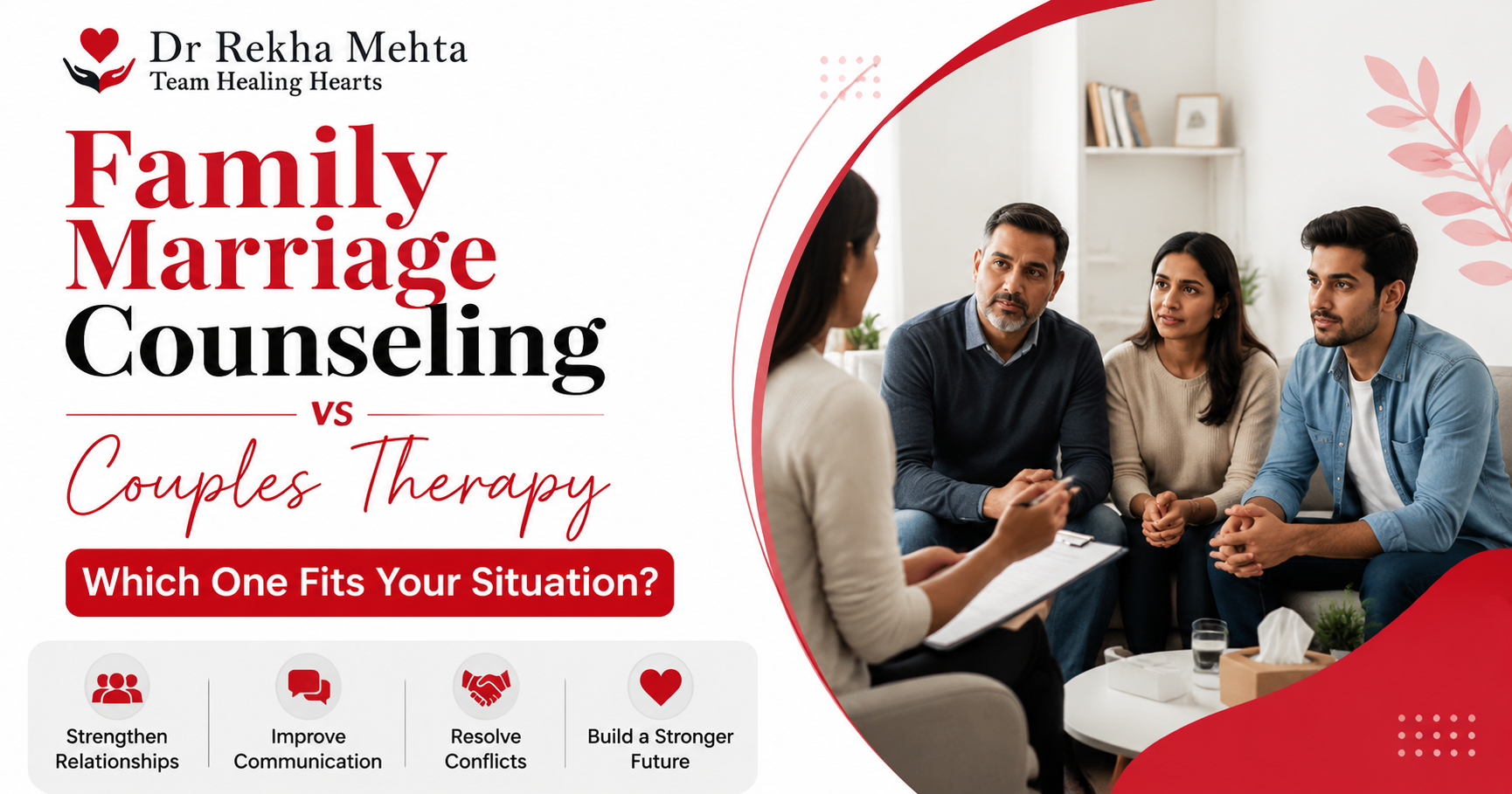


Relationships aren’t always straightforward. Some disagreements disappear after a good conversation. Others seem to come back every few weeks, no matter how hard you try to solve them. Then there are situations where the tension isn’t just between two people. Parents, children, in-laws, or extended family members become part of the problem too.
That’s when many people start wondering whether they need couples therapy or family marriage counseling.At first glance, they might seem like the same thing. After all, both focus on improving relationships. But the reality is quite different. Each approach is designed for different situations, and choosing the right one can make a real difference to the outcome. If you’re unsure which option suits your circumstances, understanding how they work can make the decision much easier.
When Family Marriage Counseling Makes More Sense
Despite the name, family marriage counseling isn’t only about married couples. It’s often recommended when relationship challenges affect the entire family rather than just two partners. Communication problems, parenting disagreements, family conflicts, emotional distance, or constant tension at home can all influence how everyone interacts with one another. In these situations, focusing only on the couple may not address the bigger picture.
Family counselling looks at the relationships between everyone involved. Instead of asking who is right or wrong, it explores how communication patterns, expectations, and unresolved issues affect the household as a whole. Many families discover that once everyone feels heard, finding practical solutions becomes much easier.
Couples Therapy Has A Different Focus
Couples therapy concentrates specifically on the relationship between two partners. Whether a couple is dating, engaged, married, or living together, therapy provides a safe space to discuss concerns openly without judgement.
Common reasons people seek couples therapy include:
- Frequent arguments
- Communication breakdown
- Trust issues
- Emotional distance
- Financial disagreements
- Intimacy concerns
- Major life transitions
The sessions focus on helping both partners understand each other’s perspectives, improve communication, and develop healthier ways of resolving conflict. Sometimes the issues are smaller than people imagine. A few unhealthy communication habits repeated over time can gradually create significant emotional distance.
The Biggest Difference Lies In Who’s Involved
This is usually the easiest way to understand the difference. If the challenge mainly exists between two partners, couples therapy is often the right choice. If family members are regularly involved in the conflict, or the relationship difficulties are affecting the wider household, family marriage counseling may offer a more complete solution.
For example, disagreements over parenting styles, constant tension with in-laws, blended family challenges, or ongoing family communication issues often require everyone to participate rather than expecting one couple to solve everything alone. Every situation is different, which is why professional guidance becomes valuable before deciding on the best approach.
Communication Is Often The Real Problem
People often assume relationships break down because of one major event. In reality, it’s usually the smaller things. Conversations become shorter. Assumptions replace honest discussions. Resentment quietly builds over months or even years.
Eventually, every conversation feels like an argument. Counselling creates a structured environment where everyone can speak honestly without interruptions, blame, or emotional escalation. Instead of reacting emotionally, people begin understanding why certain patterns keep repeating. That shift alone often creates meaningful progress.
Asking For Help Isn’t A Sign Of Failure
One of the biggest misconceptions about counselling is that it’s only for relationships that are already falling apart. That’s simply not true. Many people seek professional support long before problems become overwhelming. Just as people visit doctors before health concerns become serious, relationship support can help prevent smaller issues from growing into larger ones.
Professional guidance provides practical tools for communication, conflict resolution, emotional understanding, and healthier relationship habits that continue benefiting families long after counselling ends.
Finding The Right Support Matters
Every relationship has its own story. Some couples need help rebuilding trust. Others want to improve communication before starting a family. Some households struggle with ongoing family dynamics that affect everyone under the same roof. That’s why choosing the right professional is important.
An experienced family therapist understands that every family functions differently and avoids applying the same solution to every situation. Instead, therapy is adapted to each family’s needs, helping individuals work together towards healthier relationships and stronger emotional connections. The goal isn’t perfection. It’s creating healthier ways of understanding one another.
Final Thoughts
There isn’t a universal answer to whether couples therapy or family marriage counseling is better.
The right choice depends on the people involved and the challenges they’re facing. If difficulties mainly affect the relationship between two partners, couples therapy may be enough.The most important step is recognising that seeking support is a positive decision. With the right guidance, many relationships become stronger, healthier, and far more fulfilling than they once seemed possible.
If you’re looking for professional support tailored to your situation, Marriage Counselor Gurgaon offers compassionate counselling designed to help individuals, couples, and families build healthier relationships through practical guidance and understanding.
FAQs
1. What is the purpose of relationship counselling?
Relationship counselling helps people understand communication patterns, resolve conflicts, and strengthen emotional connections. It provides practical techniques for handling disagreements more constructively while creating a safe environment where individuals or couples can discuss concerns openly and work towards healthier, long-term relationships together.
2. When should someone consider family marriage counseling?
You should consider family marriage counseling when relationship issues affect more than just two partners. Ongoing family conflicts, parenting disagreements, communication problems, or tensions involving multiple family members can often be addressed more effectively when everyone participates in the counselling process together.
3. Can counselling help even if a relationship hasn’t reached a crisis?
Yes. Many people begin counselling before problems become overwhelming. Learning healthier communication habits early can prevent misunderstandings from becoming long-term conflicts. Seeking professional guidance isn’t a sign of failure; it’s often a proactive step towards building stronger and more supportive relationships.
4. What does a family therapist do during counselling sessions?
A family therapist helps identify unhealthy communication patterns, encourages open discussions, and guides families towards practical solutions. Rather than assigning blame, they focus on improving understanding between family members and creating healthier ways to resolve disagreements while strengthening overall family relationships.
5. How are marriage counseling services different from general counselling?
Marriage counseling services focus specifically on improving relationships between partners through communication, conflict resolution, trust-building, and emotional support. While general counselling may address individual concerns, marriage counselling centres on helping couples strengthen their relationship and work through challenges together more effectively.



