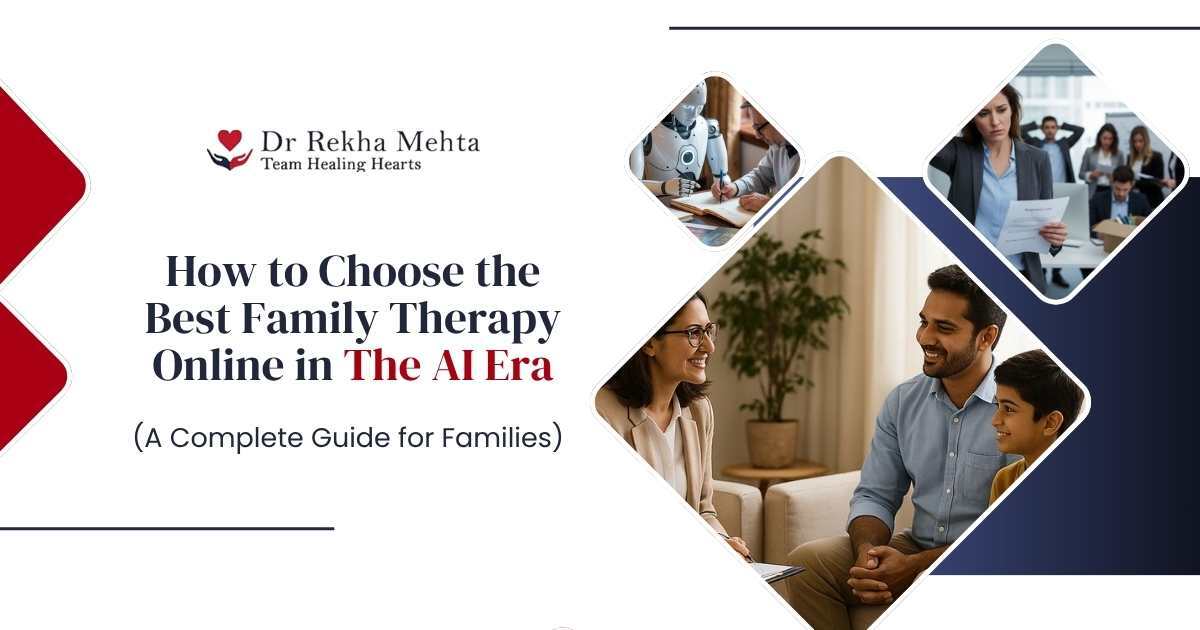


Finding the right support for your family has never been more important – or, honestly, more confusing. Between AI-generated therapy apps, chatbots claiming to “understand” your emotions, and a growing list of platforms offering counselling at the click of a button, it can feel overwhelming trying to figure out what’s actually worth your time.
That’s exactly why family therapy online has become such a widely searched topic. Families are waking up to the fact that professional help is accessible without leaving home – but knowing how to choose the right therapist is a different story altogether.
What Does Family Therapy Online Actually Mean?
Family therapy online is exactly what it sounds like – structured therapeutic sessions with a qualified professional, conducted over video call, where two or more family members participate together. It’s not a chatbot. It’s not a wellness app. It’s real therapy, just delivered virtually.
The sessions follow the same frameworks as in-person therapy – structural family therapy, narrative therapy, and Bowenian approaches – but take place from your living room, which for many families removes a significant barrier to getting started.
Why Families Are Turning to Online Therapy in the AI Era
The rise of AI has brought a strange paradox. We have more tools than ever, yet human connection feels harder to maintain. Screen time is up. Conversations are shorter. Teenagers are struggling. Couples are drifting apart even while sitting in the same room.
Online family counselling offers something no AI tool can – a trained human mind that reads emotions, notices what’s unsaid, and holds space for difficult conversations. That distinction matters more now than it ever did.
The Difference Between a Therapist and an AI App
Let’s be straightforward about this. AI tools can offer psychoeducation, breathing exercises, and journalling prompts. Some are genuinely useful. But they cannot replace a virtual family therapist who can observe group dynamics in real time, challenge unhelpful patterns, and hold each person accountable within a safe relationship.
When tensions are high, like a teen pulling away, a marriage under strain, or a parent struggling with their ageing parent, you need a professional. Not an algorithm.
What to Look for When Choosing a Virtual Family Therapist
This is where most people get stuck. Here’s what actually matters: Qualifications first. Look for someone with a recognised counselling or psychology degree, supervised practice hours, and ideally additional training in family or systemic therapy. Don’t be shy about asking.
Specialisation. A therapist who works primarily with individuals may not have the skills to manage group dynamics. A family psychologist online with specific experience in multigenerational issues, parent-teen conflict, or marital strain will serve you far better. Approach transparency. Good therapists explain their method. If someone can’t tell you what framework they use, that’s worth questioning. Comfort and fit. You’d be surprised how much this matters. The best therapist for your neighbour might be completely wrong for your family.
How to Handle Family Conflict Therapy Online Effectively
One common concern is whether family conflict therapy can actually work when everyone’s on a screen. The answer is yes – with the right setup. Here’s what helps: Join from a private, quiet space. Don’t attend to your phone while multitasking. And most importantly, commit to honesty. Online therapy only works if everyone shows up willing to be real about what’s happening.
The therapist’s job is to manage the room – even a virtual one. A skilled professional will make sure no one person dominates, that quieter voices are heard, and that sessions end with something tangible to take forward.
Red Flags to Watch Out For
Not every platform or practitioner is equal. Be cautious if a therapist:
- Avoids discussing their qualifications
- Promises quick fixes or specific outcomes
- Doesn’t offer a proper introductory session
- Rushes into advice without listening first
Trust your instincts. If something feels off in the first session, say so or find someone else.
Why the Therapist’s Values Matter More Than You Think
Families come in all forms. A good online family counselling service should be inclusive – supporting blended families, same-sex couples, intercultural relationships, and individuals at different life stages without judgement.
This isn’t a small thing. If family members feel judged or misunderstood by their therapist, the process breaks down quickly.
Final Thoughts
Choosing the right family therapy online comes down to three things: qualifications, specialisation, and fit. In an era where AI promises shortcuts to wellness, the most meaningful support still comes from a trained human who genuinely listens.
If you’re looking for compassionate, professional support that truly meets your family where you are, Marriage Counsellor Gurgaon – led by Dr Rekha Mehta, a senior counselling consultant with over a decade of experience – offers both in-person and online sessions tailored to your family’s unique needs.
FAQs
Q1. What is family therapy online, and how does it work?
Family therapy online involves live video sessions with a qualified therapist where two or more family members work through issues together. Sessions follow structured therapeutic models, are fully confidential, and take place from wherever you’re most comfortable. The process is just as effective as in-person therapy when conducted by a trained professional.
Q2. How is a virtual family therapist different from an AI therapy app?
A virtual family therapist is a real, qualified professional who observes group dynamics, manages conflict, builds a genuine therapeutic relationship, and responds to what’s actually happening in the room. AI apps can offer general wellness tips but cannot provide clinical therapy, manage real-time family conflict, or adapt to complex emotional situations the way a trained human can.
Q3. Can online family counselling help with serious relationship breakdowns?
Yes. Online family counselling is effective even in high-conflict situations – including estrangement, divorce-related stress, and deep-rooted resentment between family members. The therapist creates a structured, neutral space where each person can speak and be heard. Progress is possible when everyone commits to the process honestly.
Q4. How many sessions does a family typically need?
This depends entirely on the complexity of what you’re working through. Some families find clarity in six to eight sessions. Others benefit from longer-term work. A good therapist will discuss this openly with you after the first couple of sessions rather than giving you a fixed number upfront.
Q5. What should we do if a family member refuses to attend sessions?
It’s more common than you’d think. A family psychologist online can still work with those who are willing to participate – and often, as progress becomes visible, reluctant members become more open to joining. Individual sessions can run alongside family sessions if needed.



