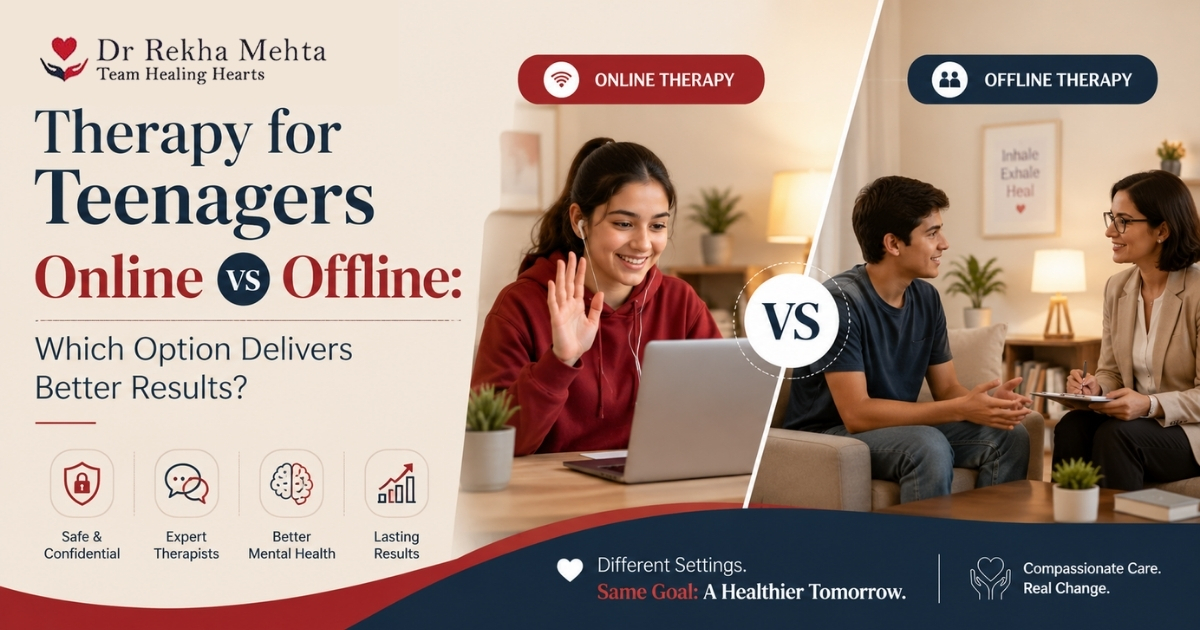


Teenage years can be exciting, confusing and emotionally demanding at the same time. School pressure, friendships, changing relationships, body image, family expectations and questions about the future can become difficult to handle. When these struggles begin affecting daily life, therapy for teenagers can give a young person a safe place to talk.
But one question often comes up for parents: should their teenager attend therapy online or meet a therapist in person? There is no universal answer. Both options can work well when the young person feels comfortable, understood and willing to participate.
What Does Therapy for Teenagers Actually Involve?
Therapy for teenagers is not simply about asking a young person to talk about their problems. It can help them understand emotions, recognise unhealthy patterns, improve communication and develop practical ways to handle difficult situations.
An adolescent psychologist may work with concerns such as academic stress, anxiety, anger, low self-esteem, relationship difficulties, digital addiction, bullying or emotional withdrawal. The approach should suit the teenager’s age, personality and circumstances.
The goal is not to tell a teenager what to do. It is to help them understand themselves and make healthier choices.
Online Therapy: Convenient and Familiar
Online sessions can feel easier for some teenagers because they can speak from a familiar environment. A teenager may feel less nervous sitting in their own room than entering a clinic. This can be especially helpful for someone who is shy, uncomfortable with new places or worried about being seen attending therapy.
Online therapy for teenagers can also make appointments easier to fit around school, tuition, activities and family routines.
The website of Marriage Counsellor Gurgaon offers confidential online counselling alongside face-to-face sessions, giving families the flexibility to choose an arrangement that suits them.
When Offline Therapy May Work Better
Some teenagers respond better to being physically present with a therapist. An in-person appointment removes some of the distractions that can come with being at home. A adolescent psychologist can also observe non-verbal communication more naturally during a face-to-face conversation.
For teenagers dealing with significant emotional distress, family conflict or difficulty expressing themselves, the physical setting of a calm counselling room may make it easier to establish a therapeutic connection. That said, comfort still matters. A teenager who strongly dislikes attending a clinic may participate more openly online.
Which Option Builds Better Connection?
The relationship between the teenager and therapist is often more important than the format. A skilled adolescent therapist should create an environment where the young person does not feel judged, criticised or constantly monitored by adults. Trust takes time.
If a teenager feels safe speaking honestly, either online or offline sessions can become useful. If they spend every session worrying about the format, privacy or being overheard, even excellent therapy may become difficult. Parents should therefore involve their teenager in the decision rather than choosing entirely for them.
Teenage Emotional Support Should Feel Safe
Young people may not always say, “I need help.” Instead, their difficulties may appear as anger, silence, falling grades, changes in sleep, social withdrawal or sudden changes in behaviour. This is where appropriate teenage emotional support can make a difference.
The therapist should give the teenager room to speak while helping them build practical coping skills. Family involvement can also be included when appropriate, particularly when home relationships are contributing to the problem.
The website highlights a non-judgemental and confidential setting for adolescent counselling, with family involvement when needed.
Online Therapy Has One Major Advantage: Accessibility
For families with demanding schedules, online sessions can remove practical barriers. There is no travel time, and appointments can be easier to arrange around school and other commitments. It can also help teenagers who live far from a suitable professional.
For some young people, therapy for teenagers becomes easier to accept when it does not require them to enter an unfamiliar clinic. However, privacy at home matters. Parents should provide a quiet space where the teenager can speak without worrying about someone listening nearby.
Offline Sessions Offer Fewer Digital Distractions
Online therapy requires a certain level of attention and privacy. Phones, notifications, poor internet connections or other people moving around the house can interrupt a session. Some teenagers may also find it tempting to switch between the therapy window and other apps.
An adolescent therapist conducting face-to-face sessions can provide a dedicated environment where the focus remains on the conversation. For teenagers who struggle with concentration or are easily distracted, this difference may be worth considering.
Parents Have an Important Role
Parents don’t need to become their child’s therapist. Their role is to create an environment where asking for help does not feel like admitting failure. Avoid turning every session into an interrogation. Instead of asking, “What did you tell the therapist?”, try asking whether the session felt helpful.
A teen psychologist may also guide parents on how to communicate more effectively without becoming controlling. This balance is particularly important when teenagers are seeking independence while still needing support.
So, Which Option Delivers Better Results?
There isn’t a simple online-versus-offline winner. For one teenager, online therapy for teenagers may feel natural and convenient. Another may open up more during face-to-face sessions. The severity of the concern, the teenager’s personality, privacy, technology access and relationship with the therapist all matter. The best format is usually the one the teenager can attend consistently and engage with honestly.
If a teenager is struggling with persistent anxiety, depression, self-harm thoughts or severe emotional distress, parents should seek professional assessment rather than relying on the format of therapy alone.
Conclusion
Choosing between online and offline therapy for teenagers should begin with the young person’s comfort, needs and willingness to participate. Online sessions offer convenience and familiarity, while face-to-face therapy can provide a dedicated space with fewer distractions. Both can be valuable when delivered by an appropriately qualified professional. Marriage Counsellor Gurgaon provides child and adolescent counselling through a personalised approach, with both online and face-to-face options available for families seeking appropriate emotional support.
FAQs
1. Is online therapy for teenagers effective?
Online therapy for teenagers can be effective when the young person has a private space, reliable internet and a comfortable relationship with the therapist. The teenager’s willingness to participate matters greatly. If they feel more relaxed at home, online sessions may actually encourage more open communication.
2. When should parents consult an adolescent psychologist?
Parents may consider speaking with an adolescent psychologist when a teenager shows persistent changes in mood, behaviour, school performance, relationships or daily routines. Withdrawal, frequent anger, anxiety, low confidence or difficulty coping with ordinary responsibilities can all be reasons to seek professional guidance rather than simply waiting for the behaviour to pass.
3. What does an adolescent therapist help with?
An adolescent therapist can support teenagers dealing with academic pressure, anxiety, emotional regulation, bullying, relationship difficulties, low self-esteem, family conflict and other challenges. The therapist provides a safe setting where the teenager can understand their emotions, develop coping strategies and learn healthier ways to communicate and respond to difficult situations.
4. How can parents provide teenage emotional support?
Effective teenage emotional support starts with listening without immediately judging, lecturing or trying to solve everything. Give the teenager space to speak and take their concerns seriously. Encourage healthy routines and professional help when necessary, while respecting their growing need for privacy and independence.
5. Is offline therapy better than online counselling for teenagers?
Neither option is automatically better. Some teenagers feel more comfortable meeting an adolescent therapist in person, while others communicate more freely online. The right choice depends on the teenager’s needs, privacy, comfort, access and ability to engage consistently. A professional can help determine which format is most suitable.



