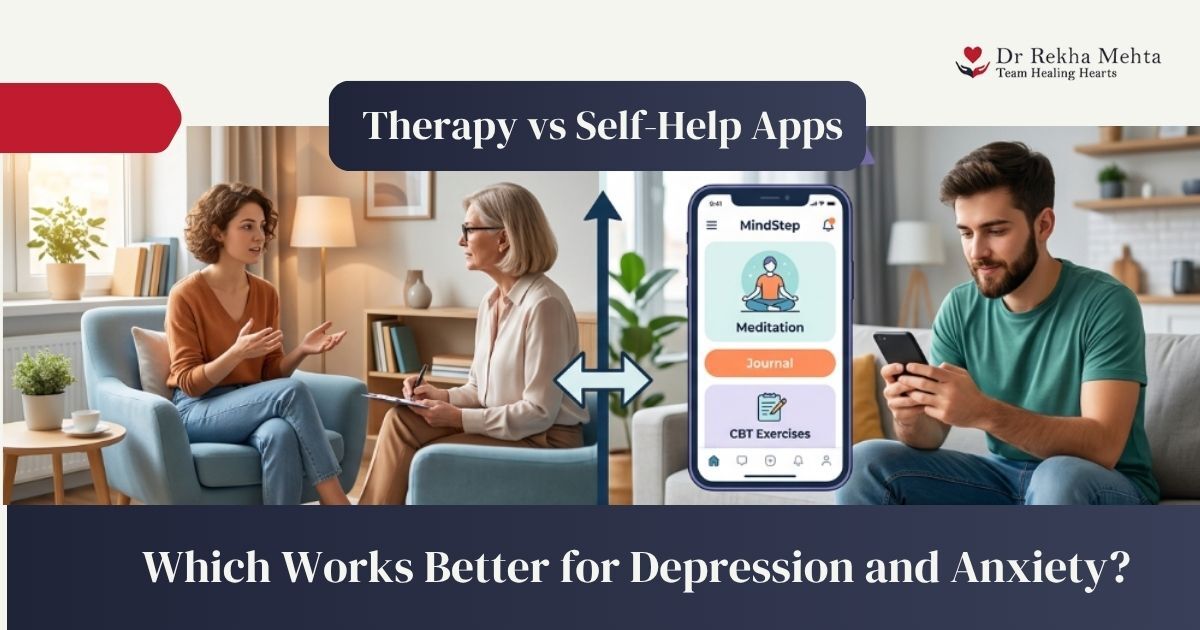


Life gets overwhelming sometimes. One bad day turns into a bad week. Then suddenly you’re feeling exhausted, anxious or emotionally drained more often than you’d like. That’s usually when people start looking for answers. Some download a self-help app. Others begin searching for a therapist for depression and anxiety. Neither choice is wrong.
In fact, both can be useful depending on what you’re going through. The real question isn’t whether one completely replaces the other. It’s about understanding what each option offers and when professional support can make a meaningful difference. As conversations around mental wellbeing become more open, more people are recognising that asking for help is a sign of strength, not weakness.
Why Seeing a Therapist for Depression and Anxiety Offers Something Different
Self-help apps have become incredibly popular over the past few years. Many offer guided meditation, breathing exercises, journaling prompts, mood tracking and relaxation techniques. They’re convenient, affordable and available whenever you need them. For people dealing with everyday stress or looking to build healthier habits, these tools can be genuinely helpful.
But emotional struggles aren’t always straightforward. Depression and anxiety often affect people differently. What works for one person may not work for someone else. That’s where working with a therapist for depression and anxiety becomes valuable. Instead of offering the same advice to everyone, therapy focuses on understanding your personal experiences, emotional patterns and individual challenges. Sessions are tailored to your needs rather than following a one-size-fits-all programme. Sometimes, simply having a safe space to talk openly without judgement can make a significant difference.
Apps Can Support You, But They Can’t Replace Human Understanding
Technology has made mental well-being resources more accessible than ever. You can complete guided exercises, learn coping techniques and monitor your mood from your phone. Many people find these features useful in their busy schedules. However, apps can only respond to the information they’re programmed to provide.
They can’t notice subtle emotional changes in your voice. They can’t ask follow-up questions when something feels deeper than it appears. They also can’t build the kind of trusting relationship that often becomes an important part of therapy. Professional mental health counselling offers personalised conversations that adapt as your needs change over time. That flexibility is something digital tools simply cannot replicate.
Real Progress Often Comes From Personalised Support
No two people experience anxiety or depression in the same way. Some struggle with constant overthinking. Others experience panic attacks, persistent sadness, low motivation or difficulty managing everyday responsibilities. Because every situation is different, treatment should reflect that. Many people also begin their search by typing ‘depression therapist near me’ when they realise their symptoms aren’t improving on their own. While online resources can provide general guidance, speaking with a qualified professional allows you to receive personalised support that reflects your unique experiences and emotional needs.
A qualified therapist helps identify underlying patterns, explore possible triggers and develop coping strategies that fit your individual circumstances. Progress is monitored together, allowing sessions to evolve as new challenges or improvements emerge. This personalised approach often gives people greater confidence as they work towards long-term emotional wellbeing.
Therapy Isn’t Just About Solving Problems
One common misconception is that therapy only helps during major life crises. In reality, many people choose therapy to better understand themselves, improve relationships, build resilience and develop healthier emotional habits before problems become overwhelming. That’s where emotional wellness therapy becomes particularly valuable.
It encourages self-awareness, emotional regulation and practical coping skills that support everyday life, not just difficult moments. Many people also discover that the benefits continue long after therapy sessions end because they’ve developed healthier ways of responding to future challenges.
Sometimes The Best Approach Is Using Both
This isn’t really a competition. Many therapists actually encourage clients to use helpful digital tools alongside professional support. A mindfulness app might help someone practise breathing exercises between sessions. Mood tracking can help identify emotional patterns worth discussing later.
Apps can reinforce healthy habits. Therapy provides guidance, understanding and personalised care. Used together, they often complement each other rather than compete. For individuals experiencing persistent symptoms, anxiety treatment counselling can provide structured support alongside practical coping techniques. While self-help apps may encourage healthy habits, counselling offers personalised guidance that evolves as your needs change over time.
Final Thoughts
Self-help apps have made emotional well-being resources more accessible than ever before, and for many people, they can be a useful starting point. However, when feelings of anxiety or depression become persistent, overwhelming or begin affecting daily life, working with a therapist for depression and anxiety offers personalised support that technology simply cannot replace. Every person’s journey is different, and choosing the right support should always reflect individual needs rather than convenience alone.
If you’re looking for compassionate, confidential and personalised counselling, Marriage Counsellor Gurgaon provides professional guidance designed to help individuals better understand their emotions, build healthier coping strategies and move towards lasting emotional well-being.
FAQs
1. Can self-help apps improve symptoms of anxiety and depression?
Self-help apps can help people practise mindfulness, journaling, relaxation techniques and healthy routines. For some individuals, these tools provide useful day-to-day support. However, if symptoms persist or begin affecting work, relationships or daily life, professional guidance may offer more personalised support.
2. When should I see a therapist for depression and anxiety?
You should consider speaking with a therapist for depression and anxiety if emotional difficulties continue for several weeks, interfere with daily responsibilities, affect relationships or feel increasingly difficult to manage alone. Early professional support can help you understand your experiences and develop practical coping strategies.
3. What happens during a counselling session?
Every counselling session is different because every individual has unique experiences. A therapist creates a confidential and supportive environment where you can discuss thoughts, emotions and challenges openly. Together, you’ll explore patterns, identify concerns and work towards practical strategies that support your wellbeing.
4. How does mental health counselling help people manage anxiety?
Mental health counselling provides personalised guidance based on your experiences rather than general advice. A qualified therapist helps identify emotional triggers, develop healthier coping techniques and build practical skills for managing anxiety over time while providing ongoing support throughout the therapeutic process.
5. Is therapy only for people with severe mental health concerns?
Not at all. Many people seek support before problems become overwhelming. Whether you’re experiencing stress, relationship difficulties or emotional uncertainty, emotional wellness therapy can help improve self-awareness, strengthen resilience and develop healthier ways of managing everyday challenges before they grow into larger concerns.



