


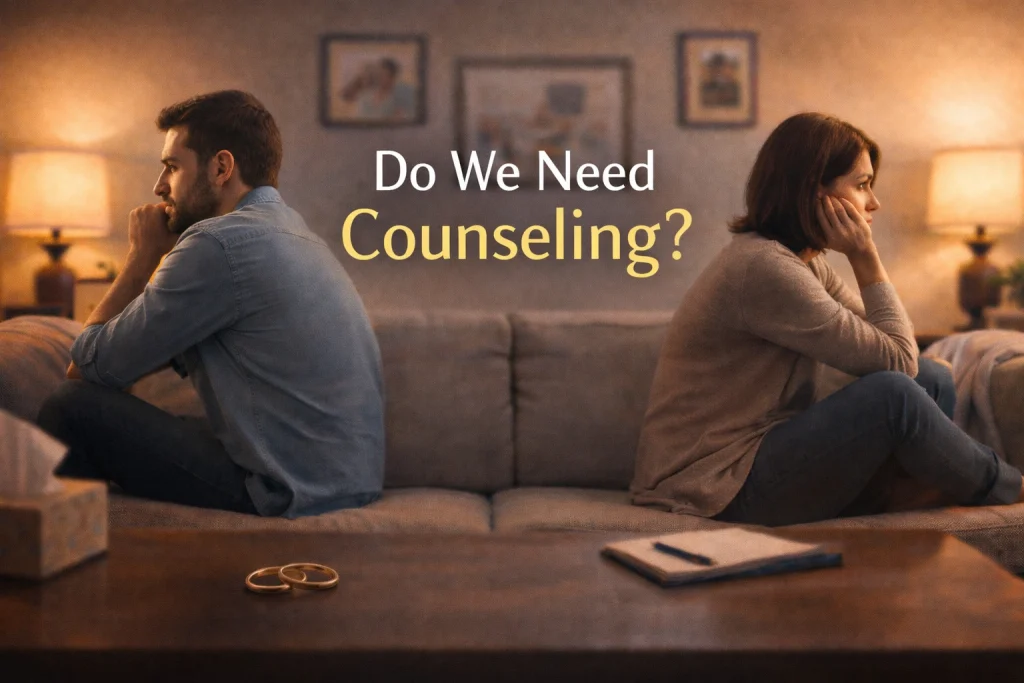
How Do I Know If My Problem Is “Big Enough” for Counseling?
Counseling? Is this for me? This is one of the most common questions people ask—sometimes aloud, often silently.
“Is our issue serious enough?”
“Are we overreacting?”
“Shouldn’t we be able to handle this ourselves?”
As a relationship psychologist, I want to begin by gently saying this: you don’t need to be at breaking point to ask for help. Counselling is not only for crises. It is also for care, clarity, and conscious growth.
Many couples delay reaching out because they believe their problem must be “big” to justify counselling—infidelity, abuse, separation, or constant conflict. While counselling certainly helps in those situations, it is equally valuable long before things reach that stage.
Let’s explore this together.
The Myth Related to Counseling
In our culture, especially in Indian families, we are often taught to tolerate, adjust, and endure. Seeking help for emotional or relational issues can feel like an admission of failure.
So, couples often tell themselves:
- “Other couples have it worse.”
- “This is just a phase.”
- “Once work stress reduces, things will be fine.”
- “If we talk it out ourselves, it will sort itself.”
Sometimes it does. Often, it doesn’t.
Small, unaddressed issues don’t disappear—they accumulate. Resentments grow quietly. Emotional distance sets in slowly. What could have been a gentle course correction becomes a painful repair job later.
Ask Yourself This Instead
Rather than asking “Is my problem big enough?”, try asking:
- Is this affecting my peace of mind?
- Do I feel unheard, unseen, or emotionally lonely in my relationship?
- Are we having the same arguments again and again with no resolution?
- Has affection, warmth, or friendship reduced between us?
- Do I feel anxious, withdrawn, or exhausted when I think about my relationship?
If the answer to any of these is yes, then your concern is valid.
Pain does not need to be dramatic to be real.
Common “Small” Issues That Actually Matter
Many couples come to therapy saying, “Our issue is not very serious…”
Yet as we talk, patterns emerge that have been hurting them for years.
Some examples:
- Constant misunderstandings and communication gaps
- Feeling emotionally disconnected despite living together
- Frequent irritation or silent resentment
- Differences in expectations from marriage or family roles
- Struggles with intimacy or affection
- Trust issues after small but repeated disappointments
- Conflict with in-laws affecting the couple’s bond
- Feeling more like roommates than partners
None of these may look “big” on the surface. But emotionally, they matter deeply.
Counseling Is Not a Courtroom
Many people fear counseling because they imagine it as a place where someone will decide who is right and who is wrong.
That is not what relationship counseling is.
Counseling is a safe, neutral space where:
- Both partners are heard without judgment
- Emotions are understood, not dismissed
- Patterns are explored gently
- Communication skills are rebuilt
- Trust and intimacy are nurtured
It is not about blame. It is about understanding.
You Don’t Have to Be “Broken” to Heal
Think of counseling like preventive healthcare.
You don’t wait for a severe illness to take care of your body. Similarly, you don’t need a relationship emergency to take care of your emotional bond.
In fact, couples who come early often say later:
“I wish we had come sooner.”
Early counseling helps:
- Prevent emotional distancing
- Stop small hurts from becoming deep wounds
- Teach healthier ways to communicate
- Strengthen the friendship within the marriage
What If Only One Partner Feels the Need?
This is very common.
One partner may feel deeply distressed, while the other feels things are “manageable.” This difference itself is important.
If one person is hurting, the relationship is hurting.
Counseling can still begin—even if one partner is hesitant. Often, once sessions start, the resistant partner begins to understand perspectives they hadn’t considered before.
Trust Your Inner Signal
If you are reading this blog, chances are something inside you is asking for attention.
That inner nudge is worth listening to.
You don’t need permission.
There’s no need to justify your pain.
And your story doesn’t need comparison with anyone else.
Your relationship deserves care—not just survival.
A Gentle Closing Thought
Counseling is not about admitting defeat.
It is about choosing growth over silence.
Connection over distance.
Understanding over misunderstanding.
If something feels heavy, confusing, or emotionally draining in your relationship, it is big enough.
Sometimes, the bravest step is simply saying:
“We deserve support.”
And that is where healing begins.



