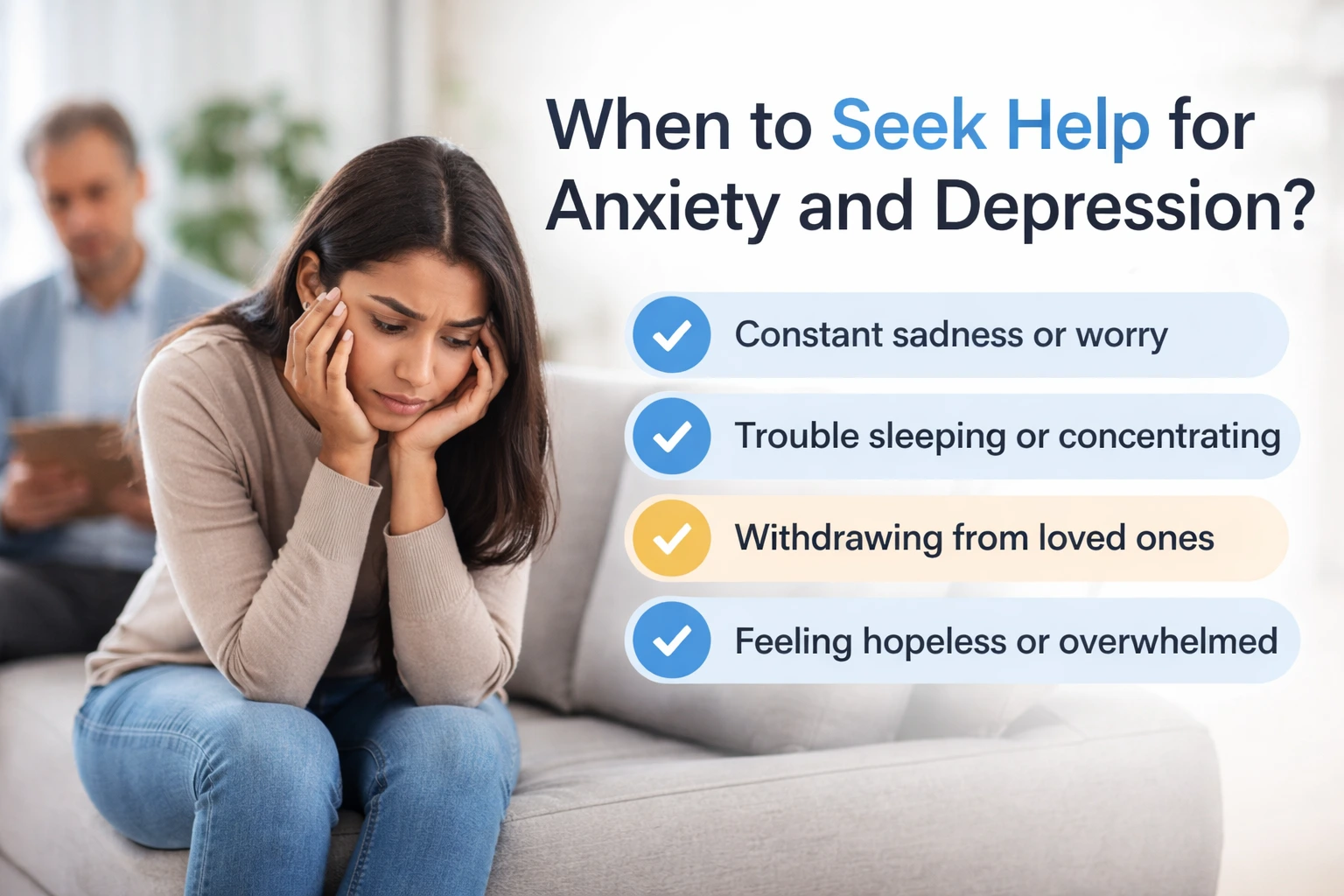


Feeling anxious or low from time to time is a natural part of life. However, when these emotions become overwhelming, persistent, or start interfering with daily functioning, it may be time to consider professional support. Many individuals struggle silently because they are unsure when to seek help for anxiety and depression. Recognizing early warning signs and taking timely action can significantly improve emotional well-being and overall quality of life.
Anxiety and depression are not signs of weakness – they are legitimate mental health conditions that deserve proper care and attention. Understanding the symptoms and knowing when to reach out can be the first step toward healing.
Understanding Normal Stress vs. Clinical Concerns
Occasional stress due to work, relationships, or life transitions is common. However, professional intervention may be necessary when:
- Feelings of sadness or worry last more than two weeks
- Sleep patterns are consistently disrupted
- Appetite changes significantly
- Concentration becomes difficult
- Daily responsibilities feel overwhelming
If these symptoms persist or intensify, it may indicate when depression needs treatment rather than temporary emotional distress.
Early Warning Signs of Anxiety and Depression
Certain emotional and behavioral changes are strong indicators that support is needed. Some important mental health counseling signs include:
- Withdrawing from family and friends
- Losing interest in activities once enjoyed
- Frequent irritability or mood swings
- Persistent feelings of hopelessness
- Physical symptoms like headaches or fatigue without medical cause
When emotional struggles begin affecting relationships, career, or physical health, it’s important to seek professional guidance.
Signs You Need Therapy for Anxiety
Anxiety becomes concerning when it is constant, intense, and difficult to control. Common signs you need therapy for anxiety include:
- Excessive worrying about everyday situations
- Panic attacks or sudden fear episodes
- Avoiding social interactions or responsibilities
- Racing thoughts that disrupt sleep
- Difficulty relaxing or feeling “on edge” most of the time
Therapy helps identify triggers, build coping strategies, and create healthier thought patterns. Early intervention often prevents symptoms from worsening.
When Anxiety and Depression Occur Together
Anxiety and depression frequently overlap. You might experience constant worry along with feelings of sadness or emotional numbness. This combination can significantly impact decision-making, productivity, and relationships.
Seeking anxiety depression professional help ensures a comprehensive evaluation. A trained therapist can determine whether symptoms stem from anxiety, depression, or both and create a tailored treatment plan.
How Anxiety and Depression Affect Relationships and Work
Mental health challenges often strain personal and professional relationships. Miscommunication, irritability, emotional withdrawal, and lack of motivation may create misunderstandings with partners, family members, or colleagues.
When emotional distress begins to affect marriages or partnerships, couples counseling or individual therapy can provide clarity and support. Addressing concerns early prevents long-term relationship damage.
Physical and Emotional Red Flags
Seek immediate professional assistance if you experience:
- Thoughts of self-harm or suicide
- Severe panic attacks
- Inability to perform daily tasks
- Extreme mood changes
- Substance misuse as a coping mechanism
These are critical signals that professional support is urgently needed.
Benefits of Professional Counseling
Working with a trained therapist provides:
- A safe, non-judgmental environment
- Emotional validation
- Structured coping techniques
- Improved communication skills
- Long-term mental resilience
Therapy is not only for crises – it can also help individuals navigate life transitions, relationship issues, and personal growth.
Final Thoughts
Understanding when to seek help for anxiety and depression can make a profound difference in your emotional health and relationships. Persistent sadness, excessive worry, emotional withdrawal, and difficulty functioning are strong indicators that professional support may be necessary. Seeking help early prevents symptoms from escalating and promotes healthier coping mechanisms. If you or a loved one are experiencing these challenges, professional guidance from experts such as Marriage Counsellor Gurgaon can provide compassionate support, clarity, and effective strategies for long-term well-being.
FAQs
1. How do I know if my anxiety requires professional help?
If anxiety is persistent, uncontrollable, or interfering with daily responsibilities, it may be time to seek anxiety depression professional help. Physical symptoms such as panic attacks, sleep disruption, or constant tension are also warning signs. Professional therapy helps identify root causes and equips individuals with effective coping strategies.
2. When does depression need treatment instead of self-care?
Occasional sadness can improve with rest and lifestyle changes, but when symptoms last longer than two weeks or worsen over time, it may indicate when depression needs treatment. Loss of interest, hopelessness, and difficulty functioning are clear signals that professional evaluation is important for recovery.
3. What are the early mental health counseling signs?
Early mental health counseling signs include emotional withdrawal, frequent irritability, excessive guilt, changes in appetite or sleep, and ongoing stress that feels unmanageable. Recognizing these early symptoms allows individuals to seek support before conditions become severe or impact relationships and work performance.
4. Can therapy really help with anxiety and depression?
Yes, therapy provides structured tools to manage negative thoughts, regulate emotions, and improve coping skills. Cognitive-behavioral techniques, mindfulness strategies, and supportive counseling can significantly reduce symptoms. Many individuals experience improved self-awareness and emotional balance through consistent therapy sessions.
5. What are the signs you need therapy for anxiety?
Common signs you need therapy for anxiety include persistent worrying, avoiding social situations, difficulty concentrating, physical tension, and panic attacks. If anxiety prevents you from enjoying daily life or maintaining healthy relationships, professional guidance can offer practical techniques and emotional support for recovery.



